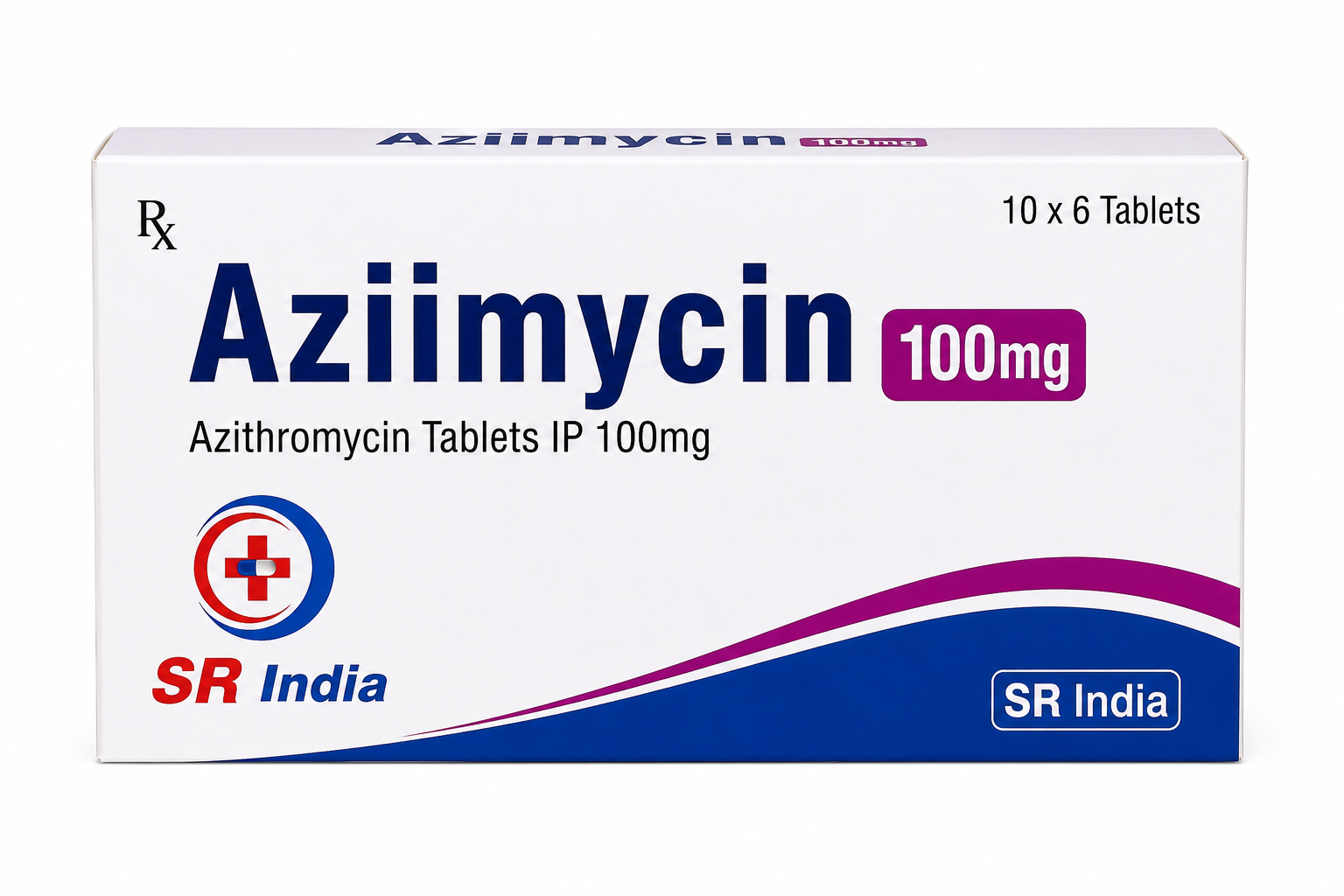
Aziimycin 100mg
Description:
Azee 100 mg Dry Syrup is a pediatric oral antibiotic formulation used for the short-term treatment of various bacterial infections in children. It is supplied as a powder that must be reconstituted with water before use (typically yielding 15 ml suspension). This medicine works by stopping the growth and multiplication of bacteria, allowing the body's immune system to fight off the infection. It is effective against susceptible bacteria but not against viral infections like the common cold or flu. The syrup is often peppermint-flavored for better palatability in kids and is prescribed based on the child's weight, infection severity, and type. It should be taken as directed, completing the full course to prevent antibiotic resistance. Always shake well before each dose and use a measuring device for accuracy. Consult a pediatrician for reconstitution instructions and monitoring.
Active Salts (Composition):
- Azithromycin (100 mg per 5 ml after reconstitution) – A macrolide antibiotic that inhibits bacterial protein synthesis by binding to the 50S ribosomal subunit, preventing bacterial replication and spread.
Uses and Benefits:
Azee 100 mg Dry Syrup is indicated for bacterial infections in children, providing targeted antimicrobial action with once-daily dosing for convenience. Key uses and benefits include:
- Respiratory Tract Infections:
- Use: Treats bronchitis, pneumonia, tonsillitis, pharyngitis, and sinusitis caused by bacteria like Streptococcus pneumoniae.
- Benefits: Clears lung and throat infections quickly (symptoms improve in 2-3 days), reducing fever, cough, and breathing difficulty for faster recovery and school attendance.
- Ear Infections (Otitis Media):
- Use: Manages middle ear infections from Haemophilus influenzae or Moraxella catarrhalis.
- Benefits: Alleviates ear pain, pressure, and hearing issues, preventing complications like chronic otitis or mastoiditis in young children.
- Skin and Soft Tissue Infections:
- Use: Addresses impetigo, cellulitis, or infected wounds due to Staphylococcus aureus.
- Benefits: Promotes healing of skin lesions, reduces swelling and pus formation, minimizing scarring and spread to deeper tissues.
- Throat and Tonsil Infections:
- Use: Controls streptococcal pharyngitis or tonsillitis.
- Benefits: Eases sore throat, swallowing pain, and fever, shortening illness duration and preventing rheumatic fever in susceptible kids.
- Gastrointestinal Infections:
- Use: Treats mild traveler's diarrhea or Campylobacter infections.
- Benefits: Reduces abdominal cramps, diarrhea episodes, and dehydration risk, supporting hydration and nutritional intake during illness.
- Other Infections (e.g., Eye or Preventive Use):
- Use: Manages conjunctivitis or prophylaxis in certain cases like pertussis exposure.
- Benefits: Provides broad-spectrum coverage for eye redness/itching or prevents severe outcomes in at-risk children.
Dosage and Administration:
- Children (based on weight): Typically, 10 mg/kg body weight once daily for 3 days (e.g., for a 10 kg child: 5 ml/day). For acute otitis media: 10 mg/kg once on day 1, then 5 mg/kg daily on days 2-5. Adjust for typhoid (twice daily) or as prescribed.
- Preparation: Reconstitute powder in 15 ml bottle with boiled/cooled water; shake vigorously. Use within 10 days; discard unused portion.
- Give orally with or without food, preferably at the same time daily. For infants, use a dropper. Do not exceed dose; complete full course even if symptoms improve.
Side Effects:
Common (usually mild and transient):
- Diarrhea, nausea, vomiting, or abdominal pain.
- Headache or rash.
Less common/rare:
- Increased neutrophils/monocytes, dark stools, or back pain.
- Serious: Allergic reactions (hives, swelling, breathing difficulty), liver issues (jaundice), or severe diarrhea (C. difficile)—seek immediate medical help.
Most resolve on their own; consult a doctor if persistent.
Precautions and Warnings:
- Allergies: Avoid if allergic to azithromycin, other macrolides, or any component.
- Pregnancy/Breastfeeding: Not applicable for children; for lactating mothers, small amounts pass into milk—monitor infant for diarrhea.
- Other Conditions: Use cautiously in liver/kidney disease, myasthenia gravis, or electrolyte imbalances. Not for cholestatic jaundice history. Dairy may reduce absorption—space by 2 hours.
- Drug Interactions: May interact with antacids, warfarin, digoxin, or ergotamine—increased toxicity risks. Inform doctor of other meds. Avoid alcohol (not relevant for kids).
- Monitor for superinfections; not for viral use to prevent resistance.
-
MRP ₹200.00
Availability: In Stock